
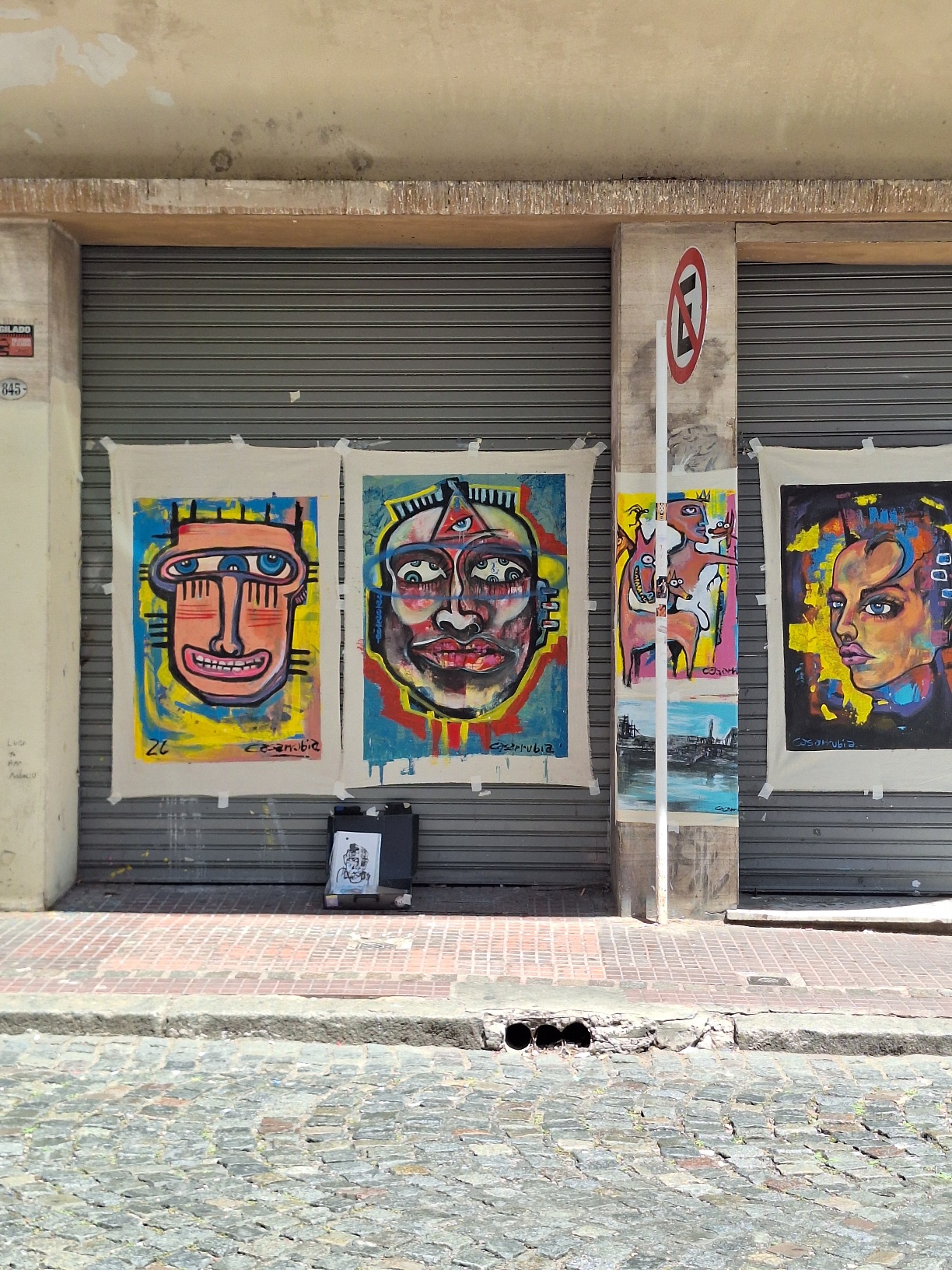
A tango that joyfully shattered my Buenos Aires dreams, wounding my heart while patching it with new hopes.
Years ago, while idling away time in Palermo, I found myself in a milonga where a bold Argentine dared to ask me to dance. That was my first step into tango. After crossing an ocean and two continents, that step became the beginning of a story for me in Istanbul. Now, years later, when I returned, I became a sleepwalker in the city’s night—this time in a place whose daytime I already knew. And now, let me share my recommendations.
Where?
First of all, the city’s polycentric structure revolves around San Telmo, Palermo, the Obelisk area, and Abasto. La Boca may host a visit as a respectful nod to the masters, but that is about it. San Telmo is like Karaköy in Istanbul. At night, some streets may feel unsafe, while on others you might pass by drunks and police cars eager for an eventful evening. You can walk five blocks from one milonga to another and dance almost without interruption.
Palermo, on the other hand, feels like an unreal set—blending the city’s already European air with an American-style culture. (That’s why, although I loved Palermo on my first trip, my feelings shifted during my most recent visit because of this artificiality.) European tourists are generally advised to stay in Palermo, with safety being a key consideration in that choice. Still, in my opinion, someone raised in Turkey—especially seasoned by Istanbul—should not be weighed on the same scale as the pastel-toned, luxury-cast European visitor. I do not think Palermo’s “high” security adds much value for us. Its location toward the inner perimeter of the city, its distance from more casual milonga venues, its lack of walking proximity to lesson-heavy centers like El Zorzal, and its tendency to conceal the city’s real darkness with artificial spotlights place it at the bottom of my Airbnb list for future trips. Not to mention that it is more expensive than other areas.
The Obelisk area, in my view, is the dullest. One—at most two—visits are enough to exhaust its flavor. It is about as exciting as melted ice cream returned to the freezer. No need for further detail.
And now to my favorite: Abasto. Abasto is close to nearly everything. The main avenue feels sufficiently “safe.” For those from Ankara, it might evoke Ulus; for Istanbulites, perhaps Şişli. It is within walking distance of El Zorzal, Boliche de Roberto, Sunday evening favorite Los Sensibleros, and Wednesday’s hidden gem Gestando Tango (Sarmiento 3632).
Why is walking distance important? First, if you are there for tango—and chances are high that you are—you will grow tired. That inner “thing” will tug at your arm and drag you along, and just when you think you cannot possibly be more exhausted, you will discover your limits. And at that point, a short walk will feel refreshing; you will connect with the city and its reality. On the other hand, although not comparable to our major cities, Buenos Aires can also have traffic in the evening. If you prefer not to observe the expressionless faces you did not meet in the milongas while riding the metro, finding an Uber and leaving 15–25 minutes early for a short ride can feel stifling.
I like taking the bus. In one of my minor-field courses, I learned that when a city lacks underpasses (Ankara can serve as a poor example), surface transportation like buses allows you to witness the city’s texture and connect with it more easily. And people on buses tend to be gentler in temperament than those on the metro. In Abasto, you can easily access numerous bus lines from the main avenue—and the metro as well, if you wish.
Lessons?
El Zorzal is probably the most well-known venue. Lessons usually begin around 16:00 almost every day. There are also classes before milongas and prácticas. During my most recent trip, I mostly attended El Zorzal because the lesson topics were clearly structured, and highly skilled, well-known teachers were leading them. Their renown matters to me—not because fame itself dazzles, but because although these names tour Europe, being able to take classes with them so affordably and in such intimate settings made me feel fortunate.
Thanks to the Argentine gentleman I mentioned earlier, I also discovered Gestando Tango (the lesson + práctica organized by the ReaMilonga team), which proved quite beneficial on Wednesdays.
Private lessons are another option. Taking lessons from the talented young teachers at El Cxuce or from instructors whose group classes you attend before milongas is not very expensive—especially compared to European equivalents. As of January–February 2026, packages such as four lessons for 180 USD or two lessons for 100 USD are available. There are higher rates, of course, but you can think of these as a baseline. The more lessons included in a package, the more economical the per-lesson price becomes. No one seems intent on squeezing extra money out of you; they often suggest something like a “trial” package at first. For private lessons, you may need to rent a studio (sala), and then you are expected to pay the studio fee separately—usually between 8,000 and 12,000 Argentine pesos.
Money and SIM cards?
On my first trip, there was an alternative exchange rate known as the “blue rate,” which differed from the official government rate. It is no longer what it once was. Back then, I exchanged money at nearly double the rate—at ice cream shops, shadowy buildings with black curtains, or hostel counters. Now, although people still murmur “exchange” in the streets near the Obelisk, the advantage is no longer significant. You can exchange money at any exchange office or Western Union branch. Not every bank sells foreign currency, but some do. Rates fluctuate, yet I did not find the differences substantial enough to worry about. Withdrawing cash from an ATM using your debit card is also an option, provided you have MasterCard, Visa, or Maestro. If you withdraw between 10:00 and 16:45 Turkey time, you may avoid the wider spreads your bank might apply when markets are closed.
As for SIM cards, if your phone supports e-SIM, it may be simpler. Otherwise, prepaid SIM cards from providers like Claro can be found after visiting two or three kiosks at most. The only challenge is that when purchasing an internet package online, you are asked for an Argentine ID number. In my case, a receptionist at the hotel lobby bought the package for me; I gave her 10,000 pesos and loaded a 15GB plan. Alternatively, if you go to a Claro store with your passport (the original, not a copy), they can process it there.
I can continue this piece with your comments, but for now, I will pause here.
In my next post, I will write about the milongas.